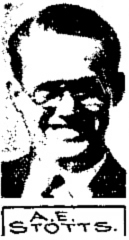
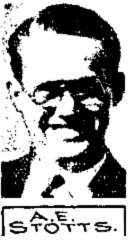
 Among rank and file Depression-era Bunker Hill down & outers, Mr. A. E. Stotts was positive royalty among the sorry character contingent. Granted, he had the lovely Mrs. Stotts, and his apartment in the Alto Hotel at 253 South Grand, and his job over at Barraclough‘s Globe Dairy Lunch, but he‘s also tubercular as all get out.
Go ahead, tell him how romantic it is to be a consumptive, and he‘ll tell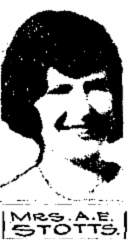 you a different story about swollen glands and night sweats and bloody sputum. Not to mention how the wife keeps sending him out to that sanatorium way the hell and gone in Daggett, you know, for his health, which finally cost him the aforementioned job at the Dairy Lunch, and though his wife has become the breadwinner as a waitress down there at his old place of employ, she sure has been getting chummy with that oft-lunching Herman Siemers fellow.
Mr. A E. and wife had met Herman J. Siemers at the restaurant, where Herman had lunched daily, and they’d befriended him, she more than he apparently. Not that Herman‘s offer to Mrs. Stotts of a moonlight horseback ride wasn‘t innocent; unfortunately, it‘s about the only thing in the world more romantic than consumption. This apparently riled A. E.
It‘s the Friday afternoon of November 11, 1932, and Mrs. Stotts has gussied herself up in full riding gear for a gallop in Rustic Canyon–Herman Siemers was a member of the Uplifter‘s Club, hoo ha! Siemers bounded up the stairs of the Stott‘s Alto Hotel, with all the good health of a man not wasting away from the inside, knocked on the door, and Mrs. Stotts opened. The two were not aware of the firearm-equipped white-plague addled Mr. Stotts lurking in the dark shadows.
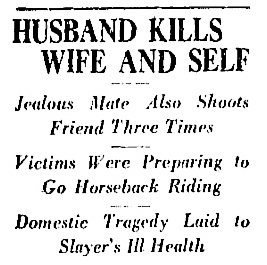
Mr. A. E. lept from the depths and fired one shot into her heart. He turned on Siemers but elected not to keep to his chest shot MO: though at very close range, one bullet went through the crown of Siemers‘s hat, another grazed his left temple as it tore through the hat brim, another burned a path across his right temple on taking out the hat brim‘s other side. A fourth bullet struck Siemers in his right leg.
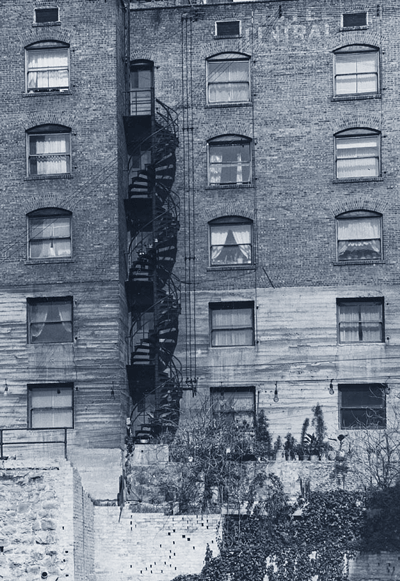
A. E., having done all he could do and with but one bullet left, dashed to the fire escape, smashed the window pane with his revolver, stepped out on the landing, placed the muzzle to his right temple and fired.
Siemers ended up in Monte Sano hospital with a broken leg, a powder burned face, and an irreparably damaged hat; Mr. and Mrs. Stotts in the grave, and the Alto with a newly vacant apartment.
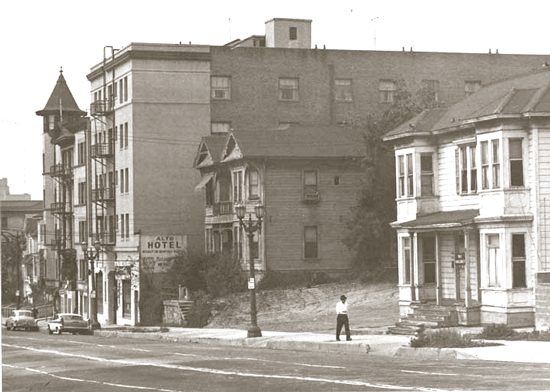
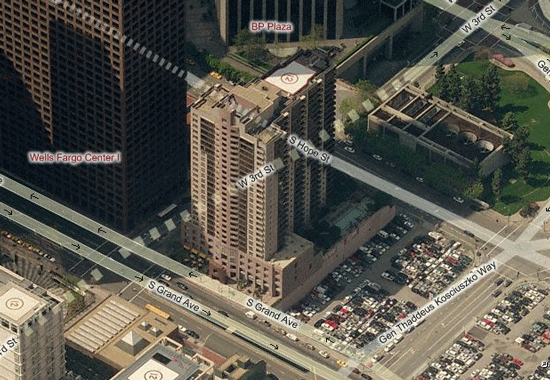
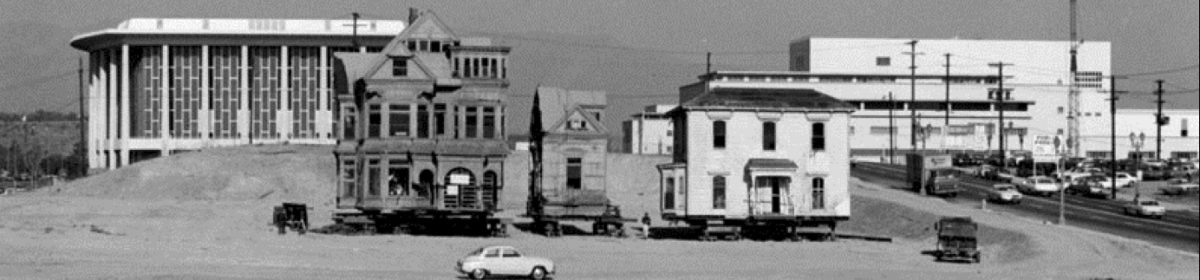
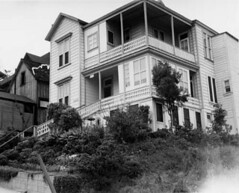
(The turreted building on the NE corner of Third and Grand was the New Grand Hotel; the entrance to the Alto is roughly where the Grand Avenue Tower Apartments’ entrance is today.)
Alto Hotel image courtesy Arnold Hylen Collection, California History Section, California State Library
Newspaper images from the Los Angeles Times
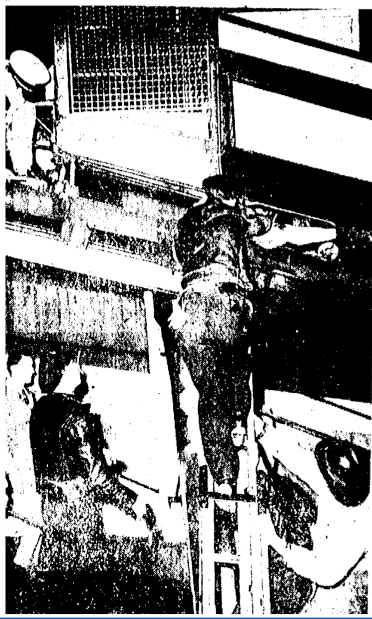
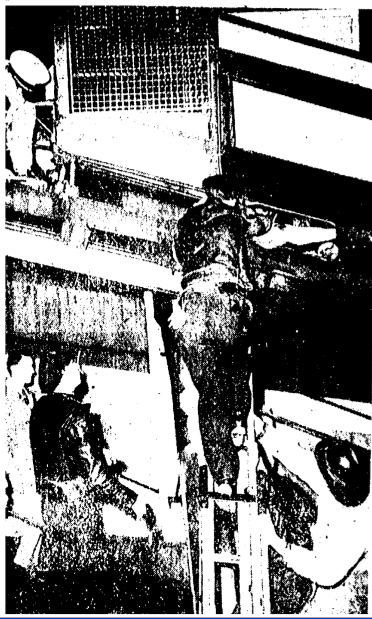
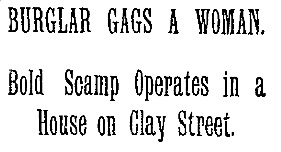
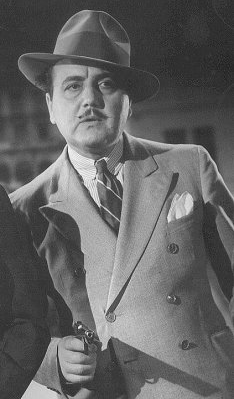
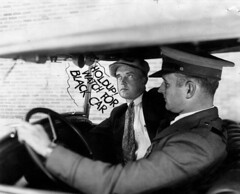 LAPD had recently installed radios in their cruisers, so officers Webb and Hamblin made it to the scene in a mere 90 seconds. The hapless perpetrator wasn”™t familiar with the latest crime fighting advances, and was promptly arrested and booked on a charge of burglary.
 15-year-old Susie Miller was a pretty brunette with a vivacious disposition who loved to play the violin. She also loved Willie Miller, a 15-year-old butcher’s apprentice, and he loved her — the two were already talking about marriage. But Susie’s parents, Mr. and Mrs. Samuel Miller disapproved of the match so strongly that they uprooted the family from their home in San Francisco and moved to Los Angeles in the hopes of squashing the love affair.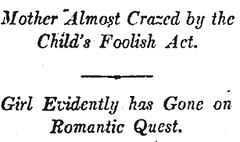
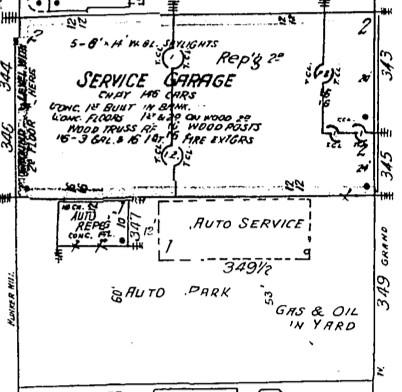


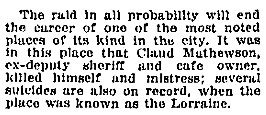
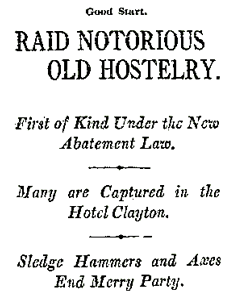
 Location: Second and Hill Streets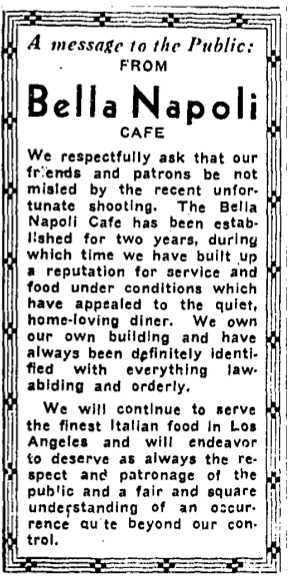
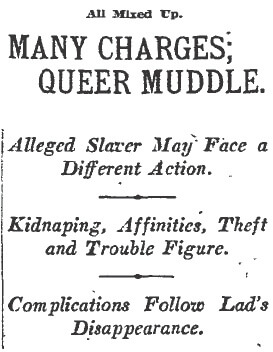
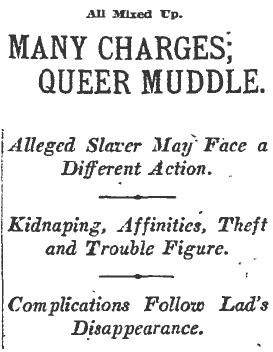
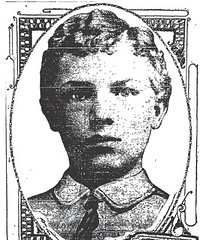 Ladda Trcka didn”™t realize when he played in the vacant lot adjacent to his home in Columbus, Ohio, that he was being watched. The angel faced ten year old boy was too young and innocent to find anything sinister in the behavior of his forty-four year old widowed neighbor, Nellie Hersey. He thought nothing of being invited into her parlor, where she would caress him and offer him more candy than he could consume in a single sitting.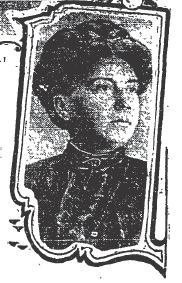

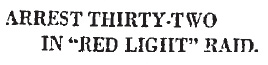
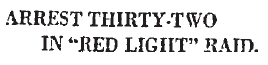 A building permit for a 3-story brick lodging house that would become the Saratoga Hotel was issued to W.W. Paden and Louis Nordlinger in the summer of 1914. A year later, the hotel was offered for sale, exchange, or lease, offering "long lease, good furniture, and cheap rent."